Part 1: One Thing Must Be Clear — Condensation Happens on Surface, Not in Air
When you see the tent inner surface getting wet during camping, many people’s first reaction is:- The air is too humid
- The tent doesn’t breathe well
- Or even suspect the tent is leaking
- Water vapor in the air has always been there
- When this vapor contacts a surface cold enough
- It transforms from gas to liquid, attaching to this surface
- Why is this surface colder?
- Why does this location tend to accumulate moisture?
- Why does the air in this tent tent to stay stagnant?
Part 2: Condensation Is Not Determined by One Factor — Three Variables Work Together Simultaneously
To explain condensation at its most fundamental level, it can be understood with a simple model: Condensation = Surface Temperature × Moisture Concentration × Airflow This is not a mathematical formula, but a judgment framework. That is to say, whether there’s noticeable condensation in the tent is not determined by any single factor, but by these three things together: 1. Is the tent surface cold enough? 2. Has enough moisture accumulated inside the tent? 3. Has this humid air been replaced? When any variable changes, the degree of condensation changes. So the difference between different tents is essentially not “who has condensation, who doesn’t,” but: Who controls these three variables better. This is why some tents in the same environment only have light condensation, while others quickly start forming water or even dripping.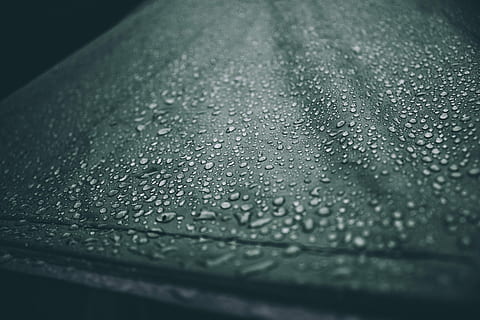
tent condensation surface
Part 3: Variable One — Surface Temperature Determines “Whether Condensation Will Start”
The most critical trigger for condensation is surface temperature dropping low enough. More accurately, when the tent inner surface temperature drops close to or below the air’s dew point, water vapor in the air begins condensing on this surface. Many people only look at air temperature, but condensation doesn’t care about “air temperature” itself — it cares about: The tent surface temperature.1. Why the Tent Surface Is Colder Than You Think
The tent fabric continuously loses heat at night, mainly in two ways:First: Convective Heat Loss
The tent outer surface continuously exchanges heat with outside air. If the outside air is colder, the tent fabric will continuously dissipate heat, and surface temperature drops.Second: Radiative Cooling
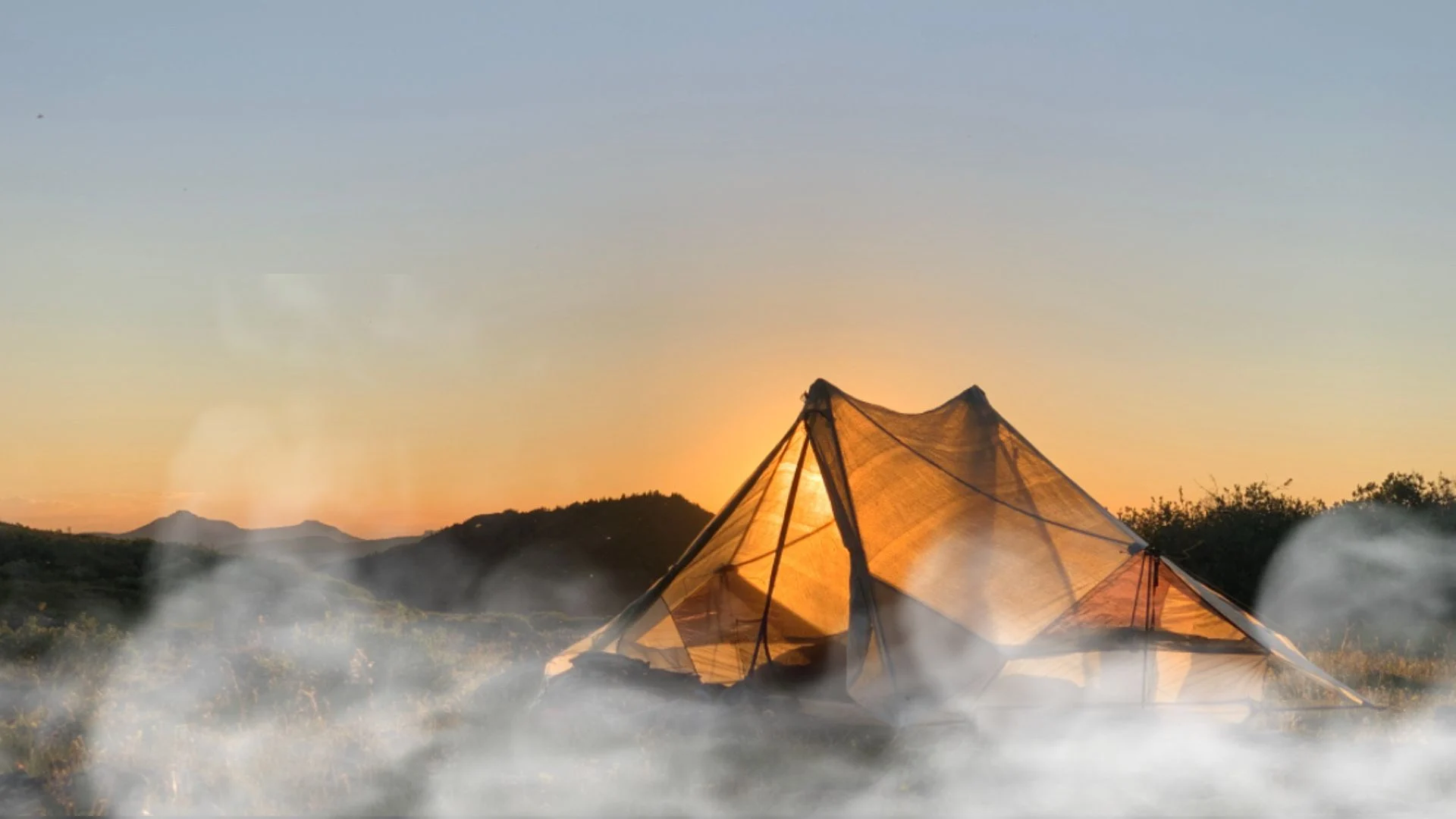
This is something many people completely aren’t aware of, but it’s actually very critical. On clear nights, the tent outer surface not only exchanges heat with air but also continuously radiates heat to the sky. Because the sky’s equivalent radiation temperature is very low, the tent outer surface gets “pulled” to become colder than the surrounding air. This means a very critical situation can occur: Even if air temperature hasn’t dropped particularly low, the tent surface may already be cold enough. This is why sometimes you encounter this situation:- It doesn’t seem particularly cold outside
- But the tent has already started forming condensation
2. Why Fabric Affects Condensation
Not all tent fabrics handle heat the same way. Some fabrics, like ultra-thin silicone coated fabric:- Thin
- Low heat capacity
- Fast heat exchange
- Slightly thicker
- Relatively slower heat exchange
- Surface temperature doesn’t change as dramatically
Part 4: Variable Two — Moisture Concentration Determines “How Much Water Can Condense”
No matter how cold the surface, if there’s not much water vapor in the air, condensation won’t be particularly obvious. So the second variable is: How much moisture has actually accumulated in the tent interior air.1. The Human Body Is a Continuous Moisture Source
When you lie in the tent, you’re not resting in a static environment — you’re continuously changing this environment. You continuously output:- Moisture in breath
- Evaporation from skin
- Body heat
2. Wet Gear Amplifies the Problem
Many people think moisture in the tent mainly comes from breathing — that’s not entirely true. If you bring these things into the tent:- Wet rain gear
- Wet shoes
- Damp socks
- Rain-soaked backpack
- Dew-covered clothing
3. Why Smaller Spaces Condense More Easily
This isn’t empty talk about “small space is bad” — it’s a direct physical relationship. The same person releases roughly the same amount of moisture per unit time. If the tent space is smaller, this moisture accumulates in a smaller air volume, and humidity rises faster. That is to say, the problem with small tents isn’t just “easy to touch walls,” but a deeper problem: Easier to quickly push interior air toward high humidity state. Once humidity rises quickly, as long as the surface is slightly cold, it more easily meets condensation conditions.Part 5: Variable Three — Airflow Determines “Whether Moisture Gets Carried Away”
Many people encountering condensation will say: “This tent has poor ventilation.” This sentence isn’t wrong, but it’s not accurate enough. The truly critical question isn’t “are there vents,” but: Does the air actually form effective exchange?1. Having Vents Doesn’t Equal Effective Ventilation
This is a very common misunderstanding. Some tent product pages will say:- Top vent windows
- Breathable structure on sides
- Designed vent
- Moisture still stays in the tent
- Only a small area slightly moved

2: Effective Ventilation’s Key Is Not Quantity, But Path
Truly useful ventilation must satisfy one thing: Air can enter from one place and exit from another. That is to say, there must be a complete air exchange path inside the tent. If there’s no path, air easily becomes stagnant. If air becomes stagnant, moisture easily accumulates. If moisture accumulates, once the surface is cold, condensation quickly appears. So the most important question in condensation problems isn’t: How many vents does this tent have? But: Can these openings let air truly complete a full path?3: People and Gear Also “Block” Original Paths
Many designs aren’t bad originally, but in actual use, effectiveness greatly diminishes. The reason is users themselves destroy the path. Common situations include:- Backpacks piled in corners
- Wet clothing hung near entrance
- Gear blocking lower intake areas
- Inner tent packed full
- All vents closed tight because of cold
Part 6: Why You See Condensation in Different Locations
Many people are confused:- Sometimes the top gets wet first
- Sometimes corners are more severe
- Sometimes the bottom area stays consistently damp
1: Top Easily Condenses First
Because the top contacts the outside more directly, and more easily cools quickly through radiative cooling. If the night sky is clear and temperature drops significantly, the top surface often enters condensation conditions earliest.2: Corners More Easily Become Severe
Corners and lower side walls typically have poorer air flow, and moisture more easily stays. These places, even if not coldest first, may also condense faster due to locally higher humidity.3: Areas Near Ground More Easily Stay Damp Long-Term
The ground itself is a cold source. Areas near ground more easily maintain low temperature, and more easily affected by ground moisture. So you see some tents not “top most severe,” but bottom or corners consistently appearing damper. These three situations aren’t conflicting. The truly unified explanation is: Different locations respectively have different advantages in the three variables of temperature, humidity, and airflow.Part 7: Why Different Tents’ Performance Varies So Much
Now we can return to the core question. Why in the same environment do different tents have such big condensation differences? The answer is: different tents perform differently on these three variables.1: Some Tents’ Surfaces Cool More Easily
- Lighter fabric
- Lower surface heat capacity
- Different exposure method
2: Some Tents Accumulate Moisture More Easily
- Space too small
- User closer to tent wall
- Gear more easily piled inside
- Moisture source concentrated
3: Some Tents’ Airflow Paths Are Poorer
- Has openings, but path incomplete
- More dead corners
- Easily blocked during use
Part 8: Practical Judgment — What Should You Look at to Know Why a Tent Condenses Easily
If you want to judge whether a tent condenses more easily in the future, you can priority look at these things:1: Whether the Surface Cools Quickly
This relates to fabric, thickness, and exposure level.2: Whether Interior Space Is Too Small
The smaller the space, the more easily moisture accumulates.3: Whether Airflow Path Actually Exists
Not looking at “are there openings,” but whether air can enter from one place and exit another.4: Whether the Path Gets Blocked During Actual Use
This often matters more than the structure itself.5: Whether Condensation Occurs in Locations You Care About Most
Some tents, even with condensation, it’s only in places that don’t really affect use; Some tents’ condensation directly affects your sleep, storage, and contact experience. What truly matters is not “absolutely no condensation,” but: Whether condensation is limited to an acceptable range.Part 9: Summary
Condensation is never a single problem. It’s not just “humid weather,” nor simply “poor ventilation,” nor something that can be explained with “this tent doesn’t work.” A more accurate understanding should be:- Condensation happens on surface
- Whether surface cools depends on heat exchange and radiative cooling
- Whether air has enough moisture depends on body, gear, and space volume
- Whether moisture can be carried away depends on whether air exchange path truly exists
- Why is there condensation?
- Which variable is dominant?
- What’s this tent’s weakest link?
- Is condensation caused by structure or amplified by usage method?