Why Your Tent Gets Soaked (It’s Condensation)
Part 1: Why This Deserves Its Own Article
When people first see a layer of water droplets inside their tent, the instinctive reaction is:
👉 Is it leaking?
That reaction is understandable. Condensation and leaks look very similar from the inside:
- The tent walls are wet
- Water sticks to your hand when you touch them
- Sometimes it drips down
- Sleeping bags, clothes, and the edges of your pillow get damp
But after camping a few more times, you start noticing something strange:
- Sometimes it didn’t rain at all, yet the tent is still wet inside
- Sometimes it’s just an ordinary humid evening outside, yet the inner walls are covered with tiny droplets
- Sometimes two people sleep in the same tent, and the next morning it’s noticeably wetter than when one person sleeps alone
- Sometimes you switch campsites at similar temperatures, yet condensation is much worse
This tells you one thing: the water inside your tent doesn’t necessarily come from rain.
Most of the time, it comes from inside the tent itself — water vapor that slowly “condensed” out of the air after you slept there overnight.
This is why experienced campers always discuss condensation separately. It’s not a minor issue, and it’s not simply a matter of “this tent is low quality.” It’s a real physical phenomenon that shows up in camping again and again.
And it’s the kind of thing that trips up new campers in predictable ways:
- Mistaking condensation for a leak
- Treating a structural issue as a waterproofing problem
- Blaming the fabric when it’s actually a ventilation issue
- Thinking a more expensive tent will solve everything
So in this article, we’re not going to focus on “how to tell condensation from leaks.” Instead, we’ll dig into the more important question:
How does condensation actually form?
Once you understand the underlying logic, the next time your tent is wet, you won’t just say “it got damp” — you’ll be able to work out:
- Where the moisture came from
- Why it was especially bad that particular night
- Why it condensed in that specific spot
- Why some tents make you feel condensation more than others
- Why “ventilation” is always mentioned, but the full story is more complicated than that
If a previous article on waterproofing helped you understand how water gets in from outside, this one is about understanding:
How water gets created inside the tent.
Part 2: The Core Truth — Condensation Is Made Inside, Not Leaked From Outside
If you only take one thing from this article, make it this:
Condensation isn’t rain pushing through the tent fabric. It’s water vapor in the air turning into liquid on a cold surface.
This might sound abstract, but you see this happening every day:
- An ice-cold drink cup “sweats” on a summer day
- The bathroom mirror fogs up after a shower
- Water droplets form on the inside of cold window glass in winter
- Steam condenses on the underside of a pot lid
None of these are “water from outside getting in.” What’s happening is that water vapor in the air encounters a surface cold enough to cause it to condense — and then it shows up as visible droplets.
Condensation inside a tent works exactly the same way.
The only difference is that a tent happens to be extremely good at meeting all the conditions for condensation to form. It’s small, sealed, occupied by people breathing, and its walls are exposed directly to cold nighttime air. It checks every box.
Part 3: Step One — Enough Water Vapor Must Accumulate First
Condensation doesn’t come from nowhere. Before water droplets can appear, the tent interior needs to build up enough water vapor.
So where does that vapor come from?
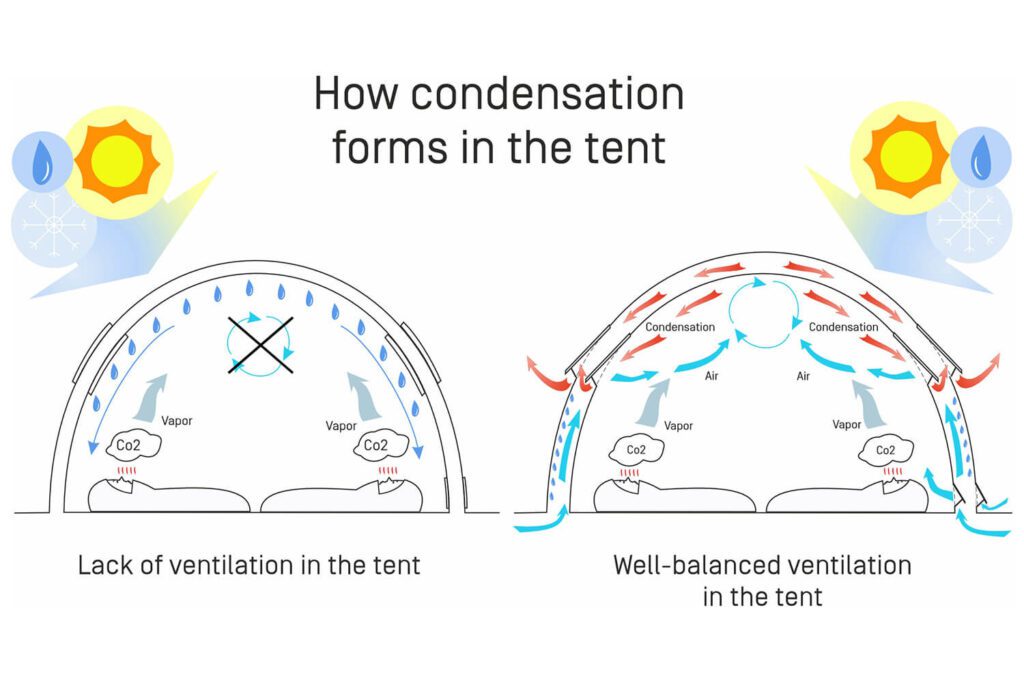
1. Breathing Is the Most Consistent Moisture Source
This is something most people underestimate.
Once you climb into your tent for the night — even if you’re just lying still, sleeping, and rolling over occasionally — your body is continuously releasing moisture into the air.
Breathing is itself a constant process of exhaling water vapor. Every breath out is warm and humid.
One person sleeping a full night generates a meaningful amount of moisture. Two people in the same tent doubles it. This is exactly why:
- One person camping: condensation is manageable
- Two people in the same tent: the walls are noticeably wetter by morning
That’s not a coincidence. The moisture load inside the tent has literally doubled.
2. Your Skin Releases Moisture Too
Beyond breathing, your skin continuously exchanges small amounts of moisture with the surrounding air. You may not be visibly sweating, but evaporation from skin surface happens constantly.
If you’ve been active during the day and your body is still carrying warmth and residual moisture when you get into the tent, that adds to the environment inside.
3. Wet Gear Multiplies the Problem
If you bring any of these into your sleeping area:
- A damp rain jacket
- Wet shoes
- Damp socks
- A towel that hasn’t dried fully
- A rain-soaked pack shell
You’ve just added entirely new sources of moisture to the enclosed space.
Many new campers wonder: “I didn’t do anything, why is it so damp inside?” The answer is usually not one thing but several stacked together:
- Breathing throughout the night
- Skin releasing moisture
- Gear evaporating
- Ground releasing humidity
All of it piles up. The air inside gets closer and closer to saturation.
4. Ground Moisture — A Bigger Factor Than Most People Realize
This one is especially pronounced when camping near lakes, rivers, or in forested areas, on wet grass, or at low-lying sites after rain.
The tent floor creates a barrier between you and the ground, but the ground itself is never passive. Damp soil, wet grass, and humid low-lying air all continuously influence the microenvironment around and under the tent.
This is why the same tent can behave so differently:
- Set up on a slightly elevated, open area: condensation is lighter
- Set up in a valley, near water, on wet grass: condensation is noticeably heavier
That’s not a coincidence. The environment itself is actively contributing to condensation formation.
Part 4: Step Two — That Vapor Must Meet a Cold Enough Surface
Having water vapor in the air isn’t enough on its own. The second required condition is:
👉 The vapor must contact a surface cold enough to cause it to condense.
Inside a tent, that cold surface is almost always the tent fabric — especially the outer layers exposed to nighttime air.
Why Tent Fabric Gets Cold at Night
As night progresses, several things happen to the outside environment:
- Air temperature drops
- Wind can accelerate surface cooling
- Temperature differences between ground and air become more pronounced
- The tent’s outer layer is in direct contact with the cold night environment
This causes the tent fabric — especially the outer fly and the layer closest to the outside — to become colder than the air inside the tent.
Meanwhile, inside the tent:
- You’re breathing
- Your body is radiating heat
- The air is carrying moisture
So you end up with a clear contrast: warm, humid air inside, cold surface at the tent wall.
When that humid air contacts the cold surface, water vapor converts to liquid and begins forming droplets.
Why It Starts as “Damp” and Becomes “Droplets”
Early on, condensation doesn’t usually appear as distinct water drops. It might first feel like a faint dampness or a thin film on the fabric.
As humidity continues rising and time passes, those micro-droplets gradually accumulate and merge. Eventually, they become the visible, tangible, sometimes dripping water you notice.
This explains a very common experience:
- Just fine when you first lie down
- Inner walls start feeling damp around midnight
- Worst by morning
That progression fits the condensation process exactly.
Why the Top and Upper Walls Condense Most
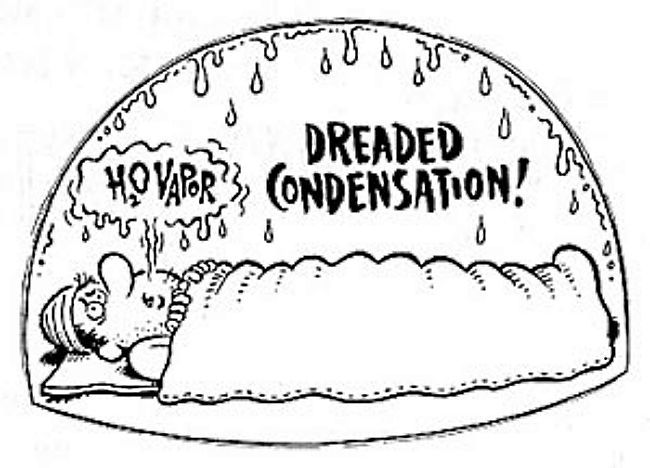
Because warm, humid air rises. The breath you exhale and the warmth your body releases naturally drift upward. When that warm, moist air reaches the colder tent top or upper inner wall of the outer fly, condensation happens most readily there.
This is why so many campers notice:
- Water droplets forming on the tent ceiling
- The upper section of the side walls feeling wet
- A light touch sends water cascading down
Part 5: Step Three — When the Air “Can’t Hold Any More,” Water Appears on Surfaces
This part is slightly more technical, but understanding it makes everything else click.
Air isn’t an unlimited container for water vapor. The amount of water vapor air can hold is closely linked to temperature.
The simple version:
Warmer air can hold more water vapor. Cooler air can hold less.
What does this mean in practice?
It means that the damp air inside your tent, once it contacts the colder tent wall surface, may suddenly find itself unable to hold the water vapor it was just carrying.
The excess water vapor has nowhere to go except out of the air — so it condenses onto the surface as liquid.
That’s condensation.
You can think of the full process like this:
Step 1: Water vapor keeps building up inside the tent
Step 2: The outer surface gradually cools
Step 3: Warm, humid air contacts the cold surface
Step 4: That air can no longer hold all its water vapor
Step 5: The excess condenses out as tiny water droplets
This logic explains so much:
- No rain, but the inside is still soaked
- It gets noticeably worse toward early morning
- Two people sleeping one night, and the walls look like they’ve been sprayed with water
Part 6: Why Some Nights Are Much Worse Than Others
Condensation isn’t always equally severe. Some nights it’s barely noticeable; other nights it’s everywhere. That difference usually comes from several factors stacking on top of each other.
1. The Air Was Already Very Humid
Environments like these start you off at a disadvantage:
- Lakeside
- Riverside
- Coastal areas
- Forested terrain
- Post-rain grasslands
- Low valley floors
These locations share a common trait: the ambient air humidity is already high, and the ground keeps releasing moisture. Add body heat and breathing to a tent in these conditions, and the air inside reaches saturation much faster.
2. A Large Temperature Drop Overnight
A warm afternoon followed by a sharply cold night is a classic condensation setup. The warmth earlier in the day — both from the environment and from activity — helps build up water vapor inside the tent. Then when the walls cool rapidly at night, there’s a large amount of warm humid air meeting cold surfaces all at once.
Spring and fall camping, especially with comfortable daytime temperatures and sharp overnight drops, tends to produce the most dramatic condensation.
3. Poor Ventilation
This is the factor most people mention, but many people just remember “ventilate more” without understanding why it actually helps.
Ventilation works by:
- Removing humid air from inside the tent
- Bringing in relatively drier outside air
- Reducing the time warm humid air spends in contact with cold surfaces
- Lowering the overall concentration of water vapor near cold tent walls
If all openings are sealed, moisture accumulates without any outlet. Once it saturates the air inside, condensation follows inevitably.
4. Too Many People in Too Small a Space
This one is straightforward. Two people in a compact tent versus two people in a more spacious tent can produce completely different experiences.
In a smaller volume, the same amount of moisture from breathing and skin evaporation is concentrated more intensely. This is why ultralight solo tents, tight two-person tents, and single-wall designs tend to present more condensation challenges — there’s just less room for moisture to disperse.
5. Wet Gear Brought Into the Sleeping Area
Worth repeating. If you already know the night will be humid and the temperature will drop sharply, and you still pile these into your sleeping area:
- Rain jackets
- Wet footwear
- Damp socks
- Half-dried clothing
You’re actively increasing your condensation risk before you even lie down.
Part 7: Why Single-Wall Tents Make Condensation Feel Much Worse
Many campers notice that single-wall tents get more complaints about being “wet inside.” This isn’t because single-wall tents are necessarily worse at keeping rain out — it’s because they put you in direct contact with condensation.
1. In a Single-Wall Tent, Condensation Happens Right in Front of You
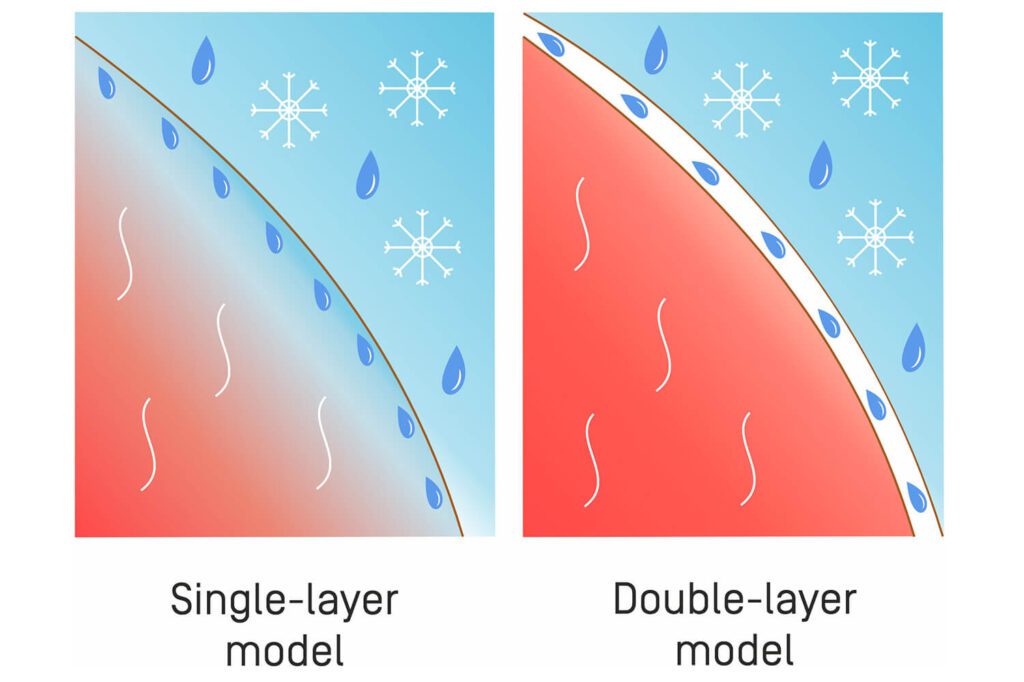
A single-wall tent has one primary layer of fabric. That means:
- Warm humid air inside contacts this single layer
- Condensation forms directly on the inside of that surface
- Every time you roll over, reach out, or sit up, you might touch it
The condensation in a single-wall tent has nowhere to hide. You’ll see it on the inner wall, feel dampness on the ceiling, and a light touch sends drops falling.
This is jarring for new campers who aren’t expecting it.
2. A Double-Wall Tent Doesn’t Eliminate Condensation — It Moves It Away From You
The design logic of a double-wall tent isn’t “no condensation.” It’s:
- Moisture passes through the inner tent
- Condenses on the colder outer surface (the fly)
- The inner tent keeps you separated from those water droplets
So condensation still happens in a double-wall tent — it just happens in a place you’re less likely to directly touch. That separation makes a significant difference in comfort.
This is why many first-time campers feel that double-wall tents are “drier.” Technically they’re often not producing less condensation — they’re just keeping it further from you.
3. Single-Wall Tents Rely More Heavily on Ventilation and Site Selection
Without that extra layer of buffer, any condensation that forms is immediately at your fingertips. This makes single-wall tent users much more dependent on:
- Good natural ventilation
- Thoughtful campsite selection
- Favorable wind direction
- Avoiding humid, low-lying environments
- Actively managing moisture sources inside the tent
This explains why experienced lightweight campers can use single-wall tents perfectly well, while first-timers often have wildly inconsistent experiences with them.
Part 8: Why Condensation Can Sometimes Look Exactly Like a Leak
People often say:
“I understand condensation, but that night it wasn’t just a little damp — the whole tent was soaking, and water was actually dripping. Is that still normal?”
The answer: yes, under the right conditions, condensation can become severe enough to convincingly mimic a leak.
1. Droplets Keep Merging and Growing
Condensation starts as fine, tiny droplets. But over time they accumulate and merge. Once they reach a certain size:
- Their weight increases
- Surface adhesion weakens
- The tent moves slightly in wind or from your motion
They fall. This is why many campers experience:
- Interior feels slightly damp at midnight
- Actual dripping by early morning
2. Touching the Walls Releases Condensation Like Rain
In a smaller tent, rolling over or adjusting your sleeping position causes your sleeping bag or shoulder to brush the inner wall. The condensation that had been building up there drops all at once.
From a sensory standpoint, that absolutely feels like rain coming in. But what actually happened is that condensation already on the inner surface was knocked loose by contact.
3. Tent Movement Redistributes Condensation
Wind, opening a zipper, someone sitting up — any of these redistribute the droplets on the tent surface.
You might see:
- The ceiling shakes, and water starts dripping along the edges
- One side has heavy buildup that eventually runs down the fabric
All of this amplifies the impression that the tent is leaking.
Part 9: The Slightly More Technical View — Three Conditions Must All Be Present
If you want to understand condensation at a deeper level, here’s a clean way to frame it.
Condensation in a tent isn’t caused by one factor. It requires three conditions to align simultaneously:
1. Sufficient Moisture
Enough water vapor has accumulated inside the tent.
2. A Cold Enough Surface
The tent wall or the inside of the fly has dropped to a temperature at which the humid air becomes unstable.
3. Humid Air Not Removed in Time
Ventilation exchange is insufficient, so moisture concentration keeps rising in the enclosed space.
When all three are present, condensation is essentially inevitable.
This is why condensation isn’t a sign that “something is wrong with this tent.” It’s a sign that:
The microclimate inside and outside the tent has been pushed by nighttime temperature and humidity into a state where water separates out of the air.
In plain terms:
- People inside keep producing humid air
- Tent walls keep getting colder
- Humid air doesn’t move out fast enough
- Eventually the air can’t hold all that moisture
- Water attaches to the tent walls
Once you understand this logic, you’ll see why reducing condensation is never just one thing. It typically means addressing several factors at once:
- Reducing moisture sources inside
- Improving air exchange
- Avoiding a fully sealed tent
- Choosing a less humid campsite
- Minimizing direct contact with the condensation layer
Part 10: Managing Condensation — Without Overpromising What’s Possible
Condensation can’t be completely eliminated. Many experienced campers will say it directly:
What you can do is manage condensation, not eliminate it.
1. Ventilation Genuinely Helps — But It’s Not a Complete Solution
Ventilation reduces condensation by helping humid air escape. But it has real limits:
- Outside air may also be very humid
- In wind and rain you can’t open everything
- Some terrain makes heavy ambient moisture unavoidable
Think of ventilation as “reducing the problem,” not “guaranteeing no problem.”
2. Campsite Selection Matters More Than Most People Think
When you have a choice, favor:
- Slightly elevated positions
- Areas with better natural air movement
- Distance from water sources
- Drier ground vegetation
Condensation is often noticeably lighter when these conditions are met.
3. Keep Wet Gear in the Vestibule, Not the Sleeping Area
This is one of the easiest changes to make with immediate results.
4. Understand What a Double-Wall Tent Actually Does
Double-wall tents don’t produce less condensation. They:
- Keep condensation further from where you sleep
- Reduce direct contact with moisture
- Make the experience more forgiving for newer campers
Part 11: Summary
The next time you wake up to a wet tent — half-drenched walls, dripping ceiling — don’t immediately blame the tent.
Most of the time, that water didn’t come from outside. It was built up step by step, like this:
Step 1: You breathed and released moisture throughout the night
Step 2: Wet gear and ground humidity added to a thickening air
Step 3: Overnight, the tent walls cooled down
Step 4: Warm, humid air met those colder surfaces
Step 5: The air couldn’t hold all that moisture anymore
Step 6: Water vapor turned into droplets and attached to the tent
That’s condensation.
It’s not an outside intrusion — it’s something generated inside. It’s not unique to any particular tent. It’s a normal physical phenomenon in camping environments.
What determines how severe it gets on any given night usually isn’t one thing but several working together:
- How much moisture you brought in
- How small the tent space is
- How humid the night air was
- How fast temperatures dropped overnight
- How cold the surfaces got
- How well ventilation worked
- Whether you camped in a naturally high-humidity environment
Once you understand this logic clearly, you’ll find it much easier to assess a tent, diagnose a wet morning, and decide how to adjust your approach next time.
Part 12: Q&A
Q1: No rain, but the tent was still wet. Is that normal?
Yes. When humidity is high, there’s a significant temperature drop overnight, and ventilation is limited, condensation happens regardless of rain.
Q2: Why does condensation get worse with two people?
Two people produce roughly double the breathing moisture and skin evaporation. The tent’s moisture load is literally twice as large.
Q3: Does a double-wall tent mean no condensation?
No. Double-wall tents still condense — typically on the outer fly. The difference is that the inner tent keeps you separated from that moisture, which feels much drier in practice.
Q4: Does heavy condensation mean the tent is poor quality?
Not necessarily. It usually means the conditions that night — temperature drop, humidity level, ventilation, number of occupants — all combined to produce condensation. Tent quality is only one variable.
Q5: Is there a tent that never condenses?
Essentially, no. The realistic goal is minimizing it and managing where it forms, not eliminating it entirely.