Understanding how stakes work is one thing.
Making them hold in real conditions is another.
Because once you’re outside, nothing is ideal:
- the ground isn’t uniform
- the wind changes
- and you don’t get a second chance at 2AM
This is where most setups fail—not because people don’t know the basics, but because they don’t adjust to what’s actually in front of them.
Start With the Ground, Not the Tent
Before you even pick up a stake, look at the ground.
Ask:
- Is it soft or compact?
- Is there rock underneath?
- Will it drain or hold water?
👉 Your setup should adapt to the ground—not the other way around.
The 5-Step Setup (What Actually Works)
This is the method I use every time. It’s simple, but it prevents most failures.
Step 1 — Find the Right Position
Don’t place the stake first.
Instead:
- pull the guyline outward
- find its natural direction
- leave room for adjustment
👉 This gives you the correct force line
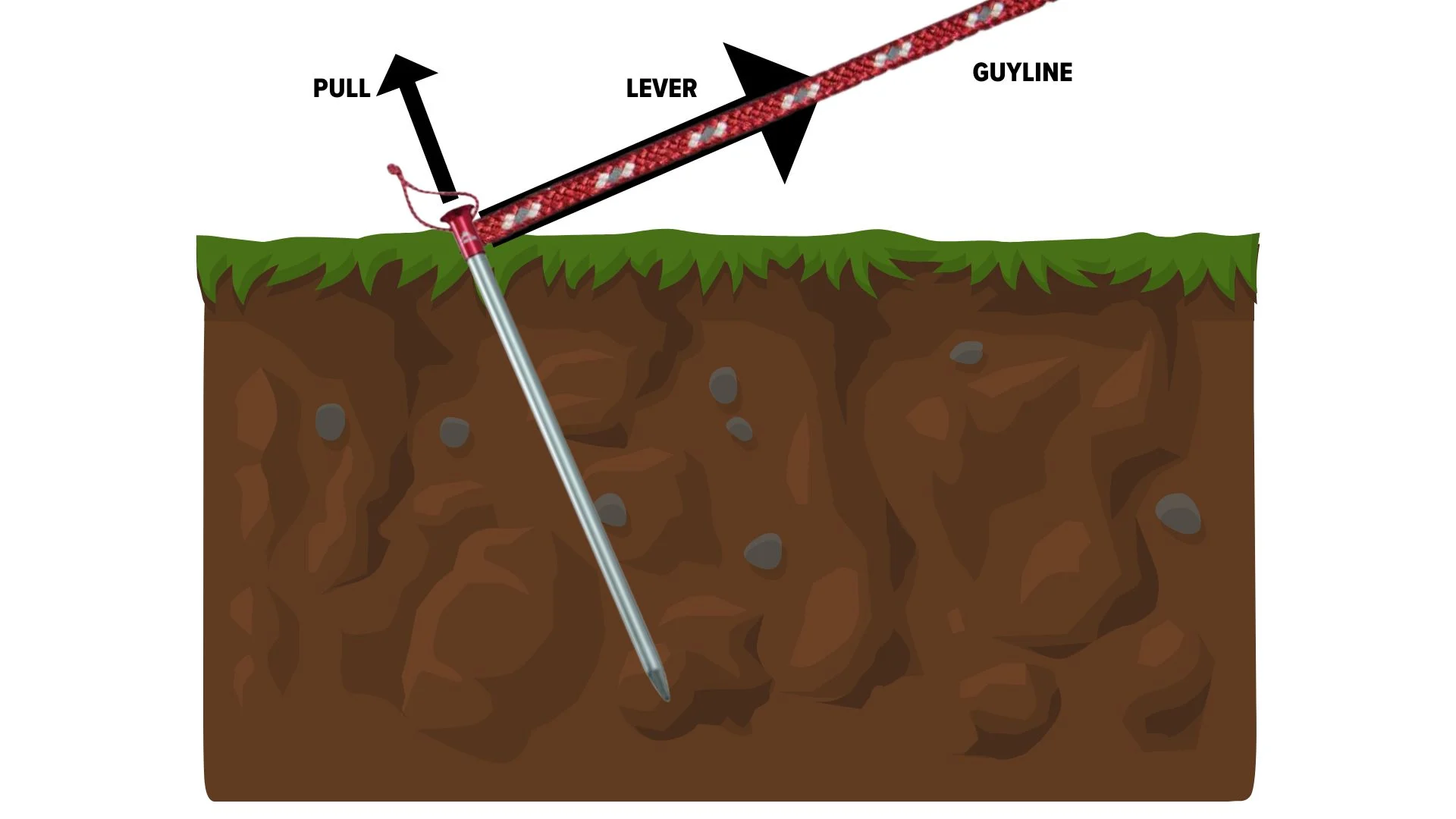
Step 2 — Set the Angle
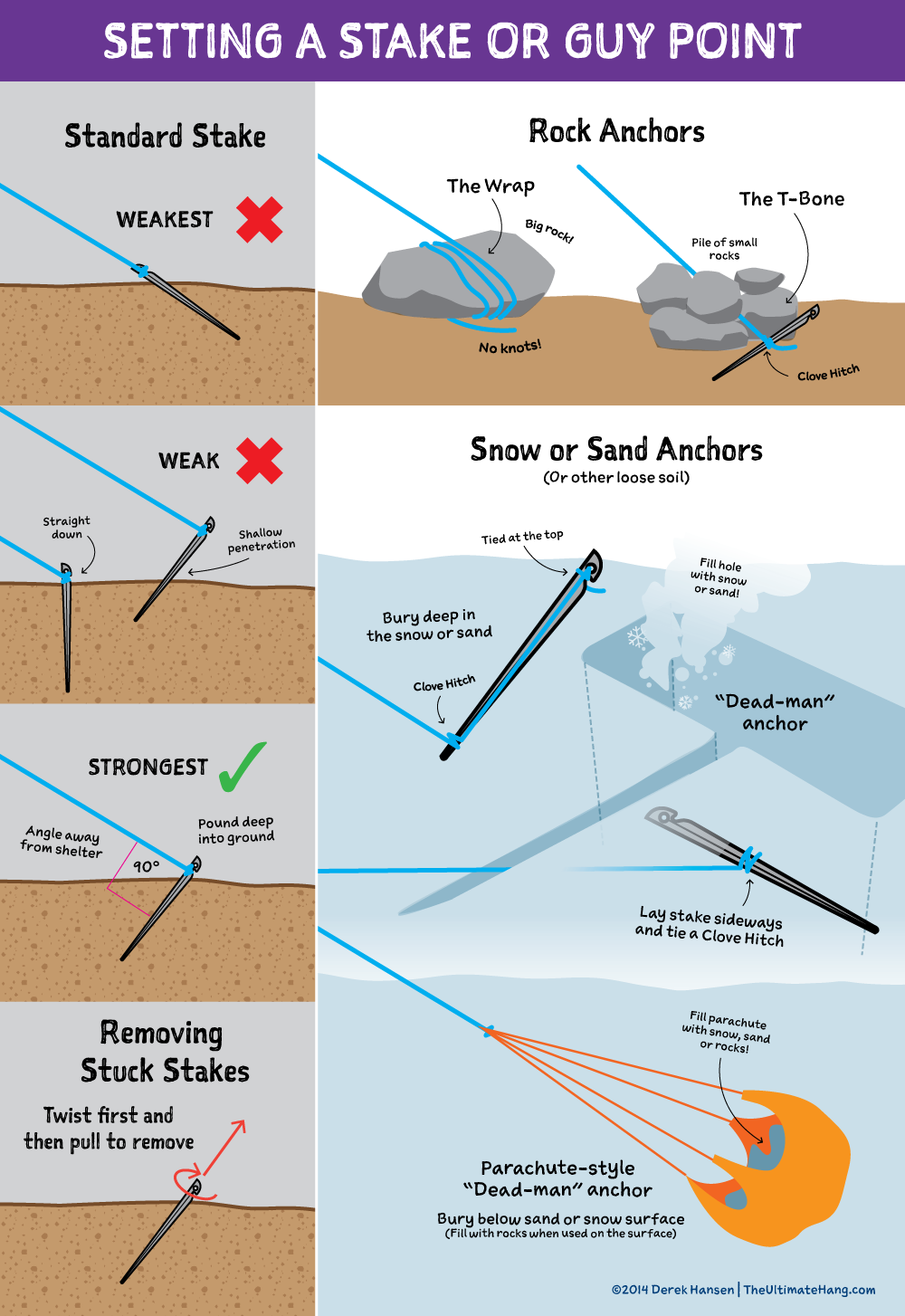
Drive the stake:
- angled away from the tent
- roughly around 45°
But more importantly:
👉 aligned with the direction of pull
Step 3 — Drive It Properly
- use a hammer if possible
- keep the angle steady
- leave about 2-3 cm above ground
👉 Don’t stomp it in with your foot—it’s unstable and unsafe.
Step 4 — Tension the System
Once all stakes are placed:
- tighten gradually
- don’t fully tension one side first
👉 You’re building a system, not fixing a point
Step 5 — Test and Adjust
This step is often skipped.
- pull on the tent corners
- check for movement
- re-tighten if needed
👉 I usually do this twice, especially in wind
Different Ground, Different Strategy
The same setup won’t work everywhere.
Grass / Normal Soil
This is the easiest condition.
- standard stakes work well
- 45° angle is usually ideal
👉 Focus on alignment and tension
Hard Ground / Rocky Soil
Main problem:
👉 stakes won’t go in fully
What works:
- find a slightly softer spot nearby
- push the tip in first, then hammer
- reduce angle slightly (around 60°)
👉 If it’s too hard, don’t force it—move a few centimeters
Sand
Main problem:
👉 no friction
Standard stakes won’t hold.
What works:
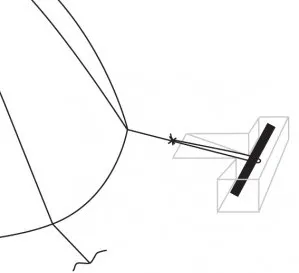
- bury the stake horizontally (deadman anchor)
- use sandbags or rocks
Wet or Muddy Ground
Main problem:
👉 strong at first, unstable over time
What works:
- avoid low areas where water collects
- expect stakes to loosen
- re-check more often
Rock / Solid Ground
Main problem:
👉 stakes won’t go in at all
What works:
- wedge stakes into cracks
- tie guylines to rocks or trees
- use heavy objects as anchors
👉 In these conditions, you’re not “staking”—you’re anchoring
Small Details That Make a Big Difference
Hook Direction
Always face the hook away from the tent
This:
- matches the pull direction
- keeps the line stable
- reduces unwanted movement
Don’t Fully Tighten Too Early
If you fully tighten one corner:
👉 the rest of the system becomes harder to balance
Leave Adjustment Range
Always leave some slack in your guyline adjusters.
👉 You will need it later
What to Do When Things Go Wrong
Stake Won’t Go In
- try another spot
- loosen the surface with a stick or tool
- use a stronger stake
Stake Keeps Coming Loose
- check alignment
- reduce angle
- move to firmer ground
Wind Picks Up at Night
- add extra stakes
- re-tension gradually
- don’t overtighten suddenly
One Habit That Changes Everything
After setup:
👉 come back after 10-15 minutes and adjust again
Because:
- soil settles
- tension redistributes
👉 This single habit improves stability more than most gear upgrades
And don’t stop there.
Before going to sleep, do one more full check.
- go around your tent
- re-tension all guylines
- check each stake
Because conditions change after sunset:
- moisture builds up (dew, fog)
- the ground softens slightly
- and your materials begin to relax
Especially with nylon shelters.
Nylon absorbs moisture from the air, which causes the fabric to stretch.
👉 This is why a tent that felt tight in the evening can feel loose later at night.
In damp conditions, it’s normal to tighten your guylines at least once more before sleep.
The Real Takeaway
Perfect conditions don’t exist outdoors.
So instead of trying to memorize rules:
Learn to read the ground,
adjust your setup,
and keep the system balanced.