Most people explain this in one sentence:
“It’s wind chill.”
That’s true—but it doesn’t really help you understand what’s happening.
Because when you’re outside, wind doesn’t just make the air colder.
It removes the conditions that allow you to stay warm.
You Don’t Stay Warm by Temperature Alone
When you’re resting outdoors, warmth is not just about air temperature.
It’s a system:
- your body produces heat
- your insulation slows heat loss
- the air around you stabilizes everything
When this system is stable, you feel warm. When it’s unstable, you feel cold.
The Invisible Layer Around You
When you stay still, a thin layer of warm air forms around your body.
You don’t notice it—but it matters.
- it reduces heat loss
- it softens temperature differences
- it creates a “buffer zone”
This layer is part of why you can feel comfortable even in cold air.
What Wind Actually Does
Wind doesn’t just “cool” you.
It does something more fundamental:
1. It Removes That Air Layer
Instead of letting warm air stay, wind constantly replaces it with colder air.
So your body must:
- heat new air
- again and again
This is continuous energy loss.
2. It Breaks Stability
Even light wind can:
- disturb insulation
- reduce efficiency of clothing
- create small but constant heat loss
You may not feel strong wind, but your system is never stable.
3. It Adds Variability
Wind is rarely constant.
It comes in:
- gusts
- pulses
- shifting directions
This creates sudden exposure and unpredictable cooling. Your body keeps reacting instead of resting.
Why Wind Feels Worse Than Cold
You’ve probably experienced this:
- A cold, still night feels manageable
- A milder but windy night feels worse
Now the reason is clear:
- still air → stable system
- moving air → constantly broken system
Wind doesn’t just lower temperature—it removes stability
Wind Also Affects Your Shelter
Wind doesn’t only act on your body. It changes your shelter behavior too.
Fabric Movement
- tarp flapping
- tent walls flexing
- structure shifting
This affects airflow, protection, and heat retention inside your shelter.
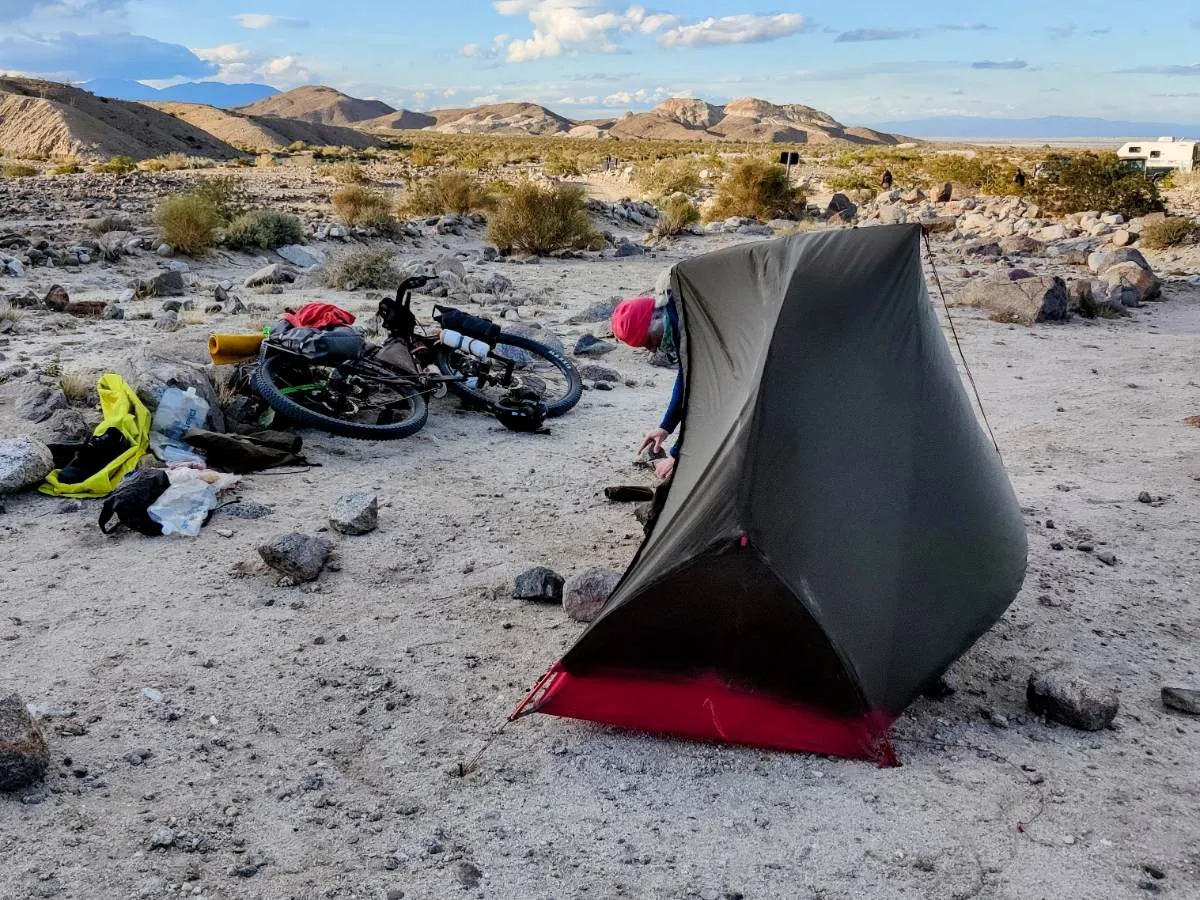
When wind hits your shelter, the fabric doesn’t just move—it pumps air in and out. Every flap pushes warm air out and pulls cold air in, undermining the protection your shelter is supposed to provide.
Noise and Sleep
Wind creates irregular sounds, sudden movement, and unpredictable noise.
Your brain reacts to this—even in sleep.
Why More Insulation Doesn’t Always Fix It
A common reaction is: “Just add more layers.”
But wind doesn’t attack only insulation. It affects:
- air layer
- shelter
- stability
- sound
So insulation alone can’t solve it.
A Better Way to Think About Wind
Instead of asking: “How do I stay warm?”
Ask:
“How do I reduce exposure?”
That means:
- blocking wind at the shelter level
- lowering exposed surfaces
- keeping air around you stable
This connects directly to how you set up your tarp or tent.
The Real Takeaway
Wind doesn’t just make you cold.
It removes the stability your warmth depends on.
That’s why:
- even light wind feels uncomfortable
- calm nights often feel warmer
- and shelter setup matters more than you think