The first time I used a tarp, I thought it would be simple.
It’s just a piece of fabric, right?
Tie a few lines, pull it tight, and you’re done.
But in reality, it never looks like the pictures.
- one side is too low
- the other side is too open
- rain finds its way in
- wind makes everything unstable
… and you keep adjusting — without really knowing what you’re fixing.
A Tarp Has No Structure — You Create It
Unlike a tent, a tarp doesn’t come with a fixed shape.
- no poles holding a frame
- no predefined geometry
- no “correct” form
The shape comes entirely from:
- where you anchor it
- how you tension it
- how you use the space
A tarp is not something you set up.
It’s something you build.
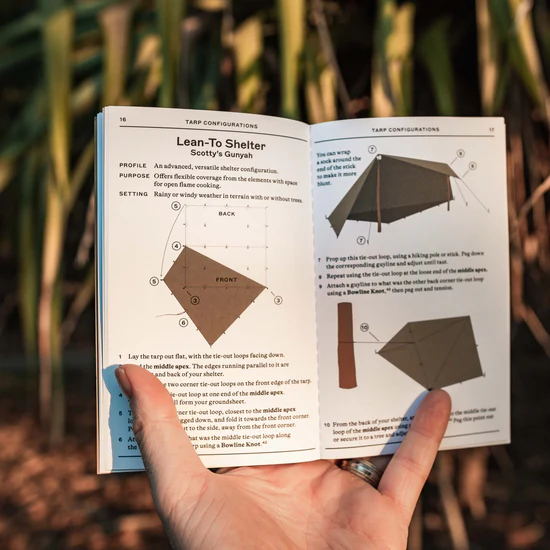
Stop Thinking in Shapes — Start Thinking in Forces
Most beginners focus on shapes:
- A-frame
- lean-to
- diamond
But that’s not the real problem.
Because the same shape can be:
- stable or unstable
- protective or useless
… depending on how it’s tensioned.
Instead of asking:
“Which setup should I use?”
Start asking:
“Where is the force going?”
Every Tarp Setup Solves Three Problems
No matter what setup you use, you’re always solving:
1. Rain
- where will water flow?
- where will it drip?
2. Wind
- where will wind hit?
- how will it push the tarp?
3. Space
- where will you sit or lie down?
- how much room do you need?
A good setup balances all three.
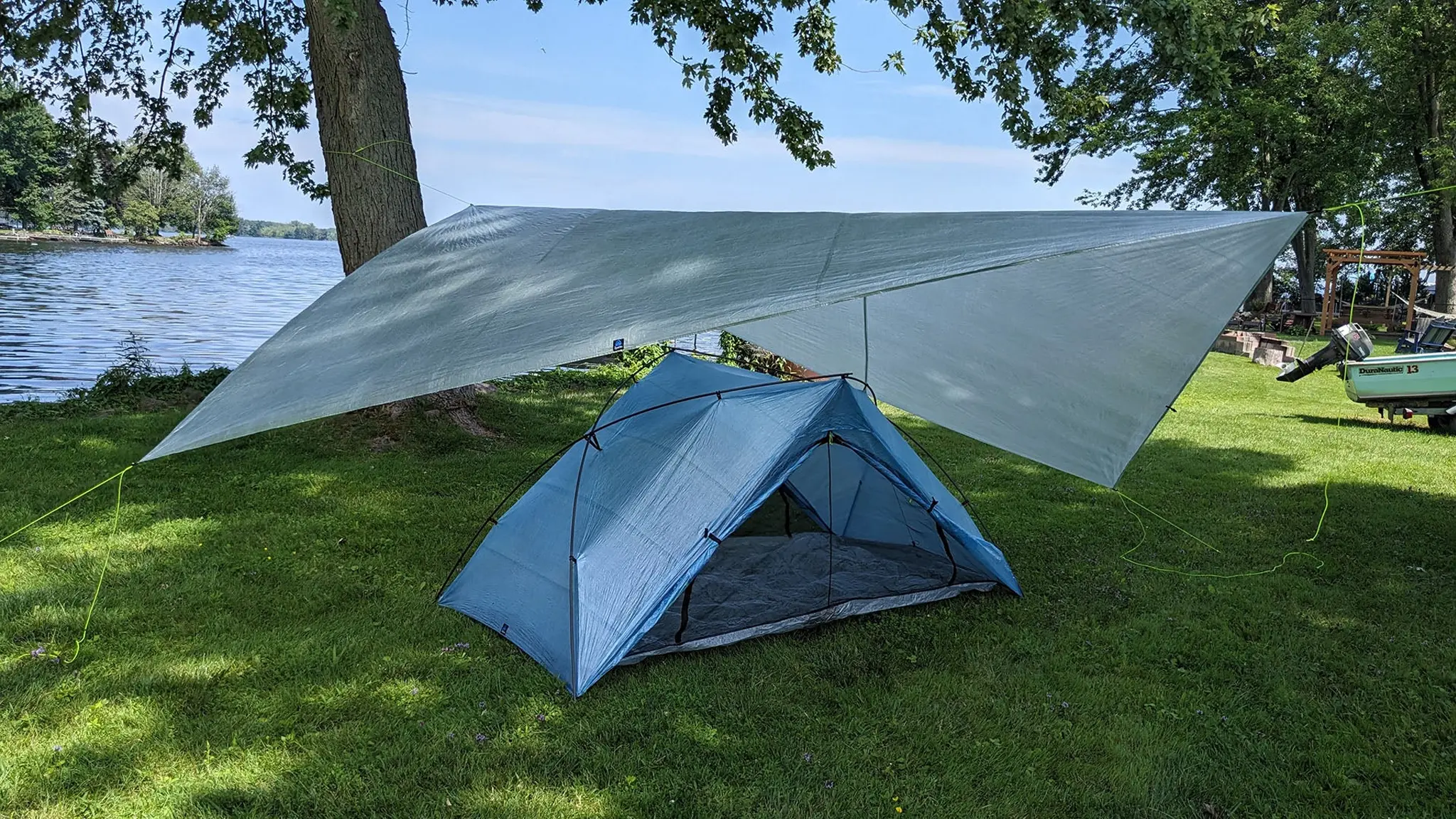
Start With One High Point
Instead of pulling everything randomly:
… start with one main anchor.
Usually:
- a ridgeline between two trees
- or a single high point with a pole
This defines:
… your main structure line.
Then Build Down From It
Once your high line is set:
- pull down the corners
- adjust one side at a time
- don’t try to fix everything at once
This gives you control.
A Simple Way to Start (When You Don’t Know What to Do)
If you’re standing there not knowing where to begin, use this:
Step 1 — Set One High Line
- tie a ridgeline between two trees
- or raise one side with a pole
This gives you your main structure.
Step 2 — Drop One Side Low
- pick the side facing the wind
- pull it down close to the ground
This gives you protection.
Step 3 — Open the Other Side
- leave the opposite side slightly higher
- use it as your entry or living space
Step 4 — Adjust the Corners
- pull each corner until the fabric looks clean
- fix sagging one area at a time
Don’t try to perfect everything at once.
That’s Enough
With just these steps, you get:
- wind protection
- rain runoff
- usable space
From here, you can adjust based on conditions.
What Most People Get Wrong
“Pulling Everything Tight at Once”
This creates:
- uneven tension
- distorted shape
- unstable structure
“Ignoring Wind Direction”
A tarp that works in calm weather:
… can fail instantly in wind.
Instead: face the wind side lower and tighter.
“Chasing Perfect Shape”
There is no perfect tarp shape.
Only:
a shape that works for your conditions
How to Know If Your Setup Is Good
You don’t need a checklist.
Just look for these:
Clean Tension Lines
- fabric is smooth
- no loose sagging areas
Water Has a Path
- nothing collects in the middle
- runoff is clear
Wind Has Less to Grab
- exposed sides are minimized
- structure feels stable
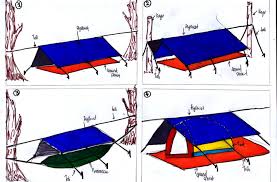
A Simple Way to Improve Any Setup
After you think you’re done:
… step back and look at it from a distance.
Then ask:
- where is it sagging?
- where is it too open?
- where is tension uneven?
Fix one problem at a time.
The Real Skill
Most people try to memorize tarp setups.
But that doesn’t work.
Because every situation is different.
The real skill is not knowing shapes —
it’s understanding how to adapt.
Once you see it this way:
- tarp setup becomes predictable
- not guesswork