If you’ve looked at guyline tensioners online, you’ve probably seen this:
- plastic ones
- aluminum ones
- Line-Lock
- sliders
- pulleys
- bars
It quickly becomes confusing.
And for many people, this leads to a simple result:
👉 they stop thinking about it altogether
or
👉 they buy something— and never really learn how to use it properly
The Real Problem Isn’t the Tensioner
Most people assume:
👉 “I just need to pick the right one”
But in reality:
the problem is not the device — it’s how you use it
Even the simplest tensioner works well if used correctly.
And even the best one fails if the system is wrong.
Why People Struggle With Tensioners
From what I’ve seen, there are three main reasons:
1. Too Many Options
There are many types, but the differences are often small.
👉 This creates unnecessary confusion
2. No Clear Use Case
People don’t know:
- when to use which
- or why it matters
3. Overthinking the Gear
Instead of learning the system, people focus on the hardware.
👉 But tensioners are just tools—not solutions
Let’s Simplify It (What Actually Matters)
Instead of memorizing 8 types, think in 3 categories:
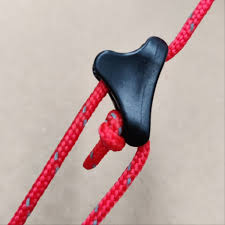
1. Basic Tensioners (Plastic / Simple Adjusters)
- common on most tents
- cheap and widely available
👉 Good for:
- beginners
- light use
- simple setups
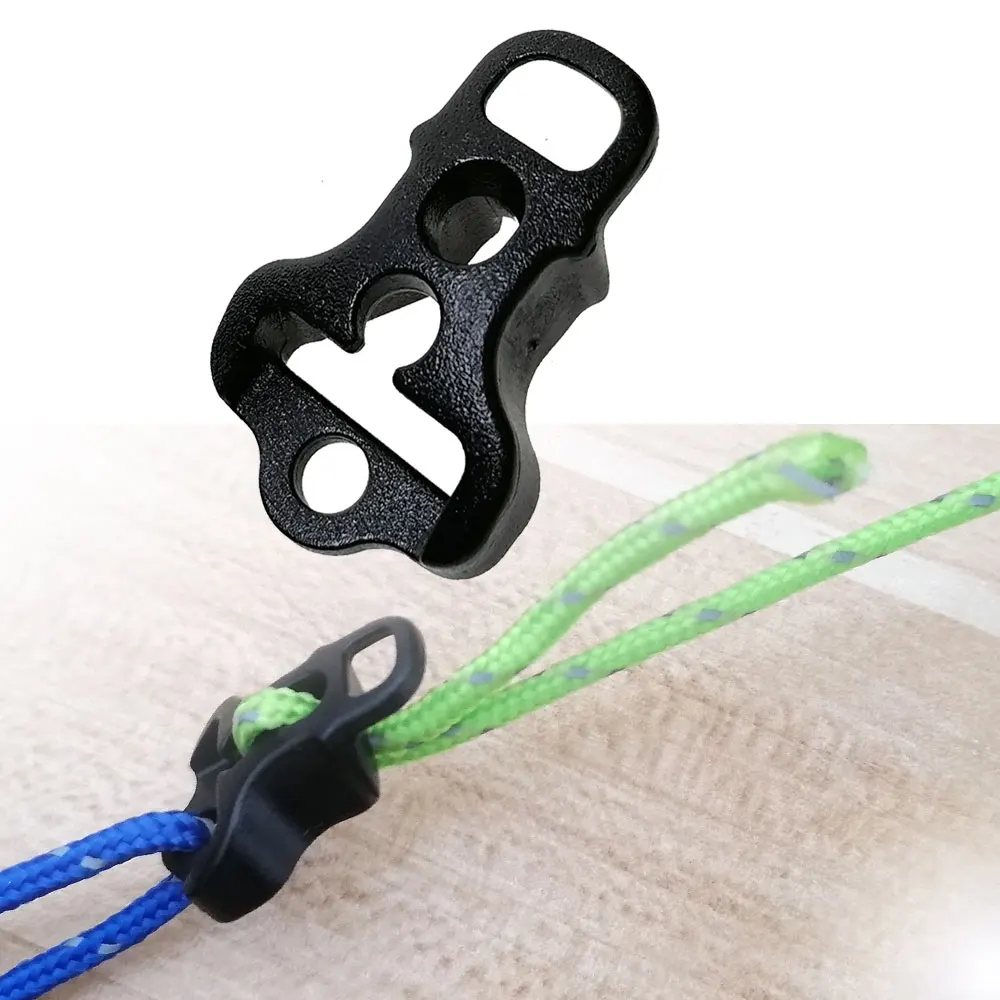
2. Line-Lock Style (Recommended)
- smooth adjustment
- wide range
- easy to use
👉 Good for:
- regular camping
- most tents and tarps
👉 This is what I personally recommend for most people
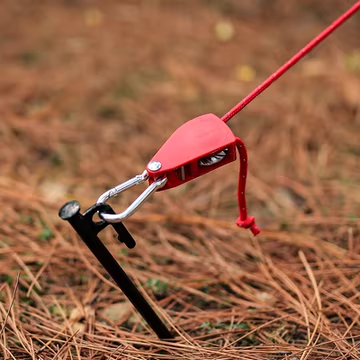
3. Pulley / High-Load Systems
- easier to tighten under load
- more mechanical advantage
👉 Good for:
- large tarps
- windy conditions
- bigger setups
What You Don’t Need to Worry About
You don’t need:
- the lightest
- the most expensive
- the most “advanced”
👉 You need something you can:
- understand
- adjust quickly
- use reliably in the field
The Real Skill Is Not Choosing — It’s Using
No matter what tensioner you use:
👉 the key is how you apply tension
If you:
- overtighten — structure distorts
- uneven tension — system becomes unstable
- never re-adjust — everything loosens
👉 The tensioner itself can’t fix these problems
A Simple Recommendation
If you’re not sure what to get:
👉 just use Line-Lock style tensioners
They are:
- easy to learn
- flexible
- reliable
👉 That’s enough for 90% of setups
The Real Takeaway
There are many types of tensioners.
But that’s not what matters.
What matters is having a system you can adjust easily
and understanding how tension works.
Once you understand that:
- 👉 the choice becomes simple
- 👉 and your setup becomes more stable