You’ve probably experienced this.
The air temperature doesn’t seem that low. You’re wearing enough. Your sleeping bag should be warm enough.
But once you lie down—
👉 the cold comes from below.
And it feels stronger than the air.
Almost like:
👉 the ground is “pulling heat out of you”
This Isn’t Just Contact — It’s Continuous Heat Drain
Most people think:
“The ground is cold because you’re touching it.”
That’s not wrong. But it’s not the real reason it feels so much colder.
The real reason is this:
The ground doesn’t just feel cold — it keeps taking heat from you, continuously.
1. Air Warms Up — The Ground Doesn’t
When you’re exposed to cold air:
- your body warms the air around you
- a thin warm layer forms
- heat loss slows down
But the ground behaves differently.
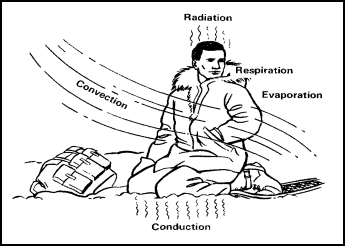
👉 The key difference:
- air = limited, can warm up
- ground = massive, doesn’t warm up (for you)
2. The Ground Has Huge Thermal Mass
This is the part most people never think about.
The ground is not just “cold.”
👉 it has thermal mass
That means:
- it can absorb a large amount of heat
- without changing temperature much
So when you lie on it:
👉 your body becomes a continuous heat source
👉 the ground becomes a continuous heat sink
And unlike air:
- it doesn’t “fill up” with heat
- it doesn’t stabilize
👉 it just keeps pulling heat from you
3. Direct Contact Creates a Fast Heat Path
Heat moves in different ways:
- air → slow (convection)
- ground → fast (conduction)
When you lie on the ground:
👉 you create a direct pathway for heat to flow out
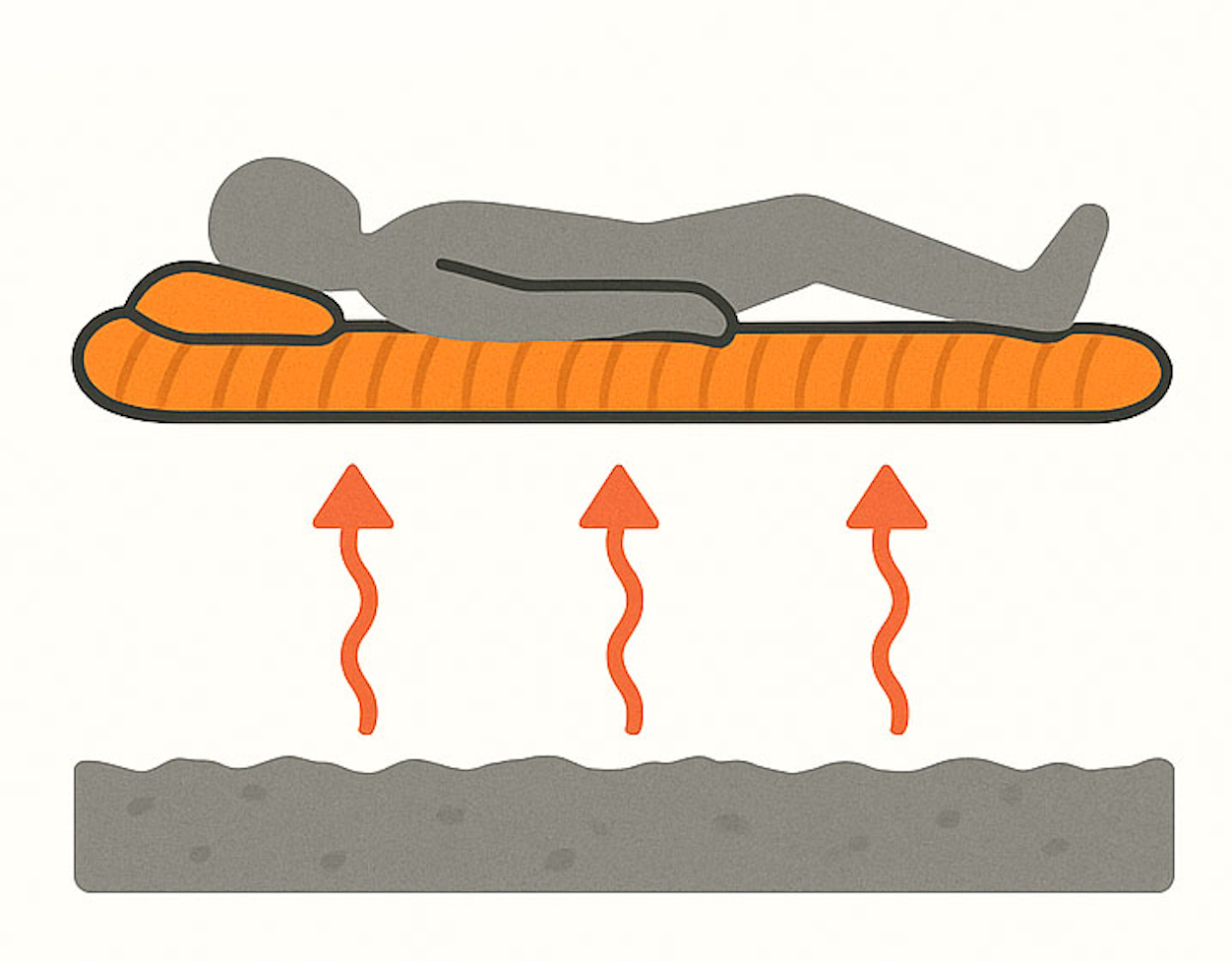
This is why:
- even a small cold surface feels intense
- and the effect is immediate
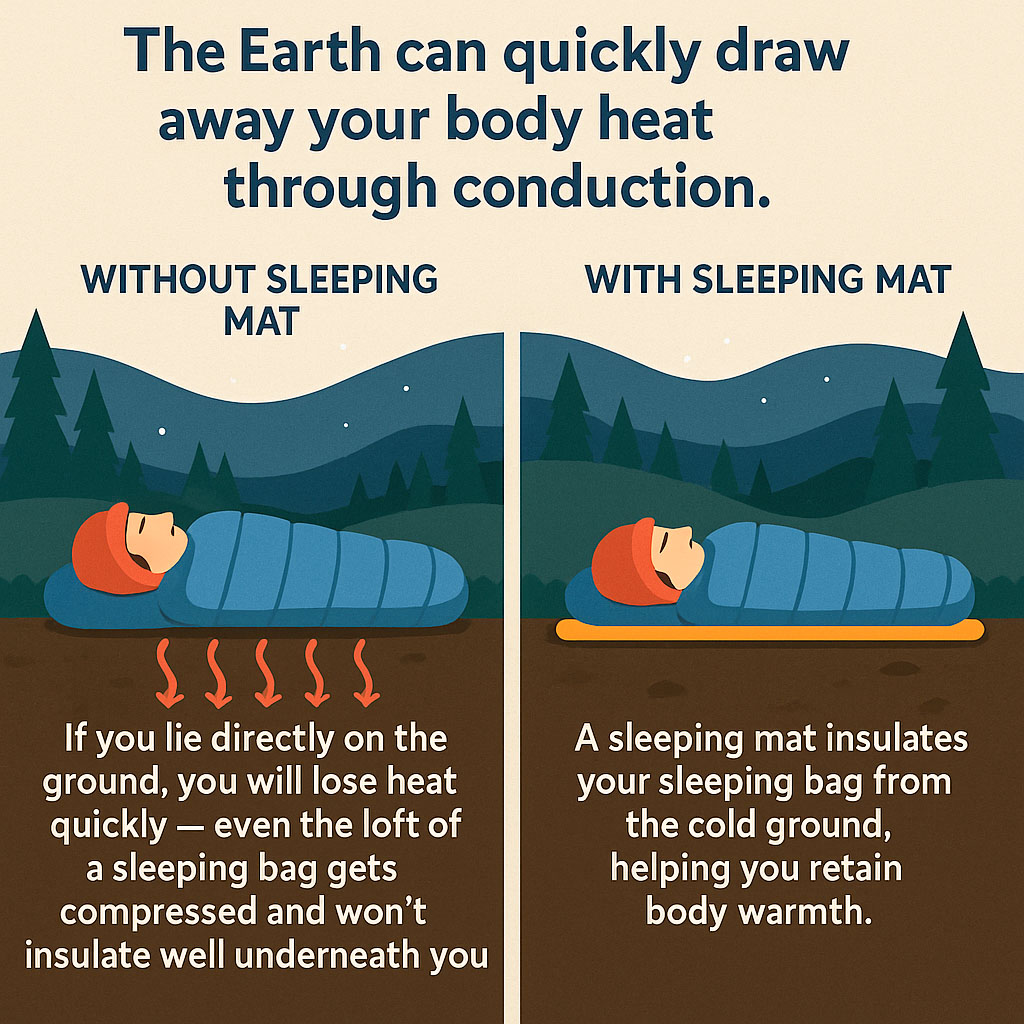
4. Compression Makes It Worse
Your sleeping bag works by trapping air.
But when you lie down:
- the insulation under your body gets compressed
- air pockets disappear
- insulation effectiveness drops
So underneath you:
👉 there is very little protection left
👉 That leaves:
your body → thin material → ground
A very efficient heat loss path.
5. The Ground Is Always “Reset”
Another important difference:
- air can warm up and stabilize
- the ground cannot (at your scale)
Even if you lie in one spot for hours:
👉 the ground continues to draw heat away
Because:
- heat spreads deeper into the earth
- your local area never “warms up enough”
What This Feels Like
This kind of cold is very specific:
- it comes from one direction (below)
- it feels stronger than the air
- it doesn’t improve over time
👉 it’s a constant drain, not a temporary effect
Real Camp Scenario
You’re camping on a cool night.
- air temperature feels manageable
- your sleeping bag seems fine
You lie down. Within minutes:
- your back or hips feel cold
- the feeling doesn’t go away
- even if your upper body feels okay
👉 because heat is continuously leaving your body into the ground
What Actually Works (This Is Where It Matters)
You cannot “fight” the ground with more clothing.
You need to break the heat transfer path.
1. Use Insulation That Resists Compression
Sleeping pads work differently from sleeping bags. They:
- maintain structure under pressure
- keep insulating air layers intact
👉 This is why a pad matters more than extra clothing
2. Increase Thermal Resistance (R-Value)
Instead of guessing:
👉 think in terms of resistance to heat flow
Higher R-value:
- slows heat transfer
- reduces energy loss
3. Layer Your Ground System
Instead of relying on one layer:
- combine foam + inflatable
- add redundancy
👉 reduces heat loss significantly
4. Eliminate Direct Contact Points
Watch for:
- hips
- shoulders
- feet
These areas compress insulation the most.
5. Don’t Rely on Your Sleeping Bag Underneath
This is a common mistake.
👉 The insulation under you is mostly ineffective
Your warmth from below comes from:
👉 your sleeping pad, not your sleeping bag
3 Practical Observations
Tip 1 — Ground Cold Feels Immediate
If you feel cold quickly, it’s usually conduction.
Tip 2 — Adding Clothes Doesn’t Fix Ground Loss
Because the problem is not “air insulation”
Tip 3 — A Good Pad Can Change Everything
Often more than upgrading your sleeping bag
The Real Takeaway
The ground feels colder than the air not because it’s “colder”—
but because:
it continuously absorbs your heat through direct contact, without ever stabilizing
Once you understand that, the solution becomes clear:
👉 don’t just try to stay warm — stop the heat from leaving in the first place.