Part 1: Why Does It Always Feel Colder Than the Forecast?
Most people’s first real camping trip hits them with this confusing situation:- 👉 Weather says 10℃ (50℉)
- 👉 But inside the tent, it feels like 5℃ — or even colder
The real truth: Perceived temperature isn’t just about the actual temperature — it’s the result of environment + tent working together. And most people seriously underestimate how much the tent matters.
Part 2: Tents Don’t “Generate Warmth” — They Only Do Three Things
New campers often assume tents are meant to keep you warm. But the more accurate way to think about it:Tents only help you reduce heat loss. They don’t produce heat on their own.
They mainly do three things:
- Block wind
- Create separation from the environment
- Slightly stabilize air temperature
Part 3: Wind — Why It Makes Temperature “Drop”
1. There’s a Layer of “Warm Air” Around Your Body
When you’re stationary outdoors, your body naturally creates a small micro-environment. A relatively warm, slow-moving layer of air surrounds your skin and clothing, because:- Your body constantly radiates heat
- Air gets heated and stays close to you
- In low-wind conditions, this air layer isn’t immediately stripped away
Think of it as a “mini thermal barrier” — invisible but real.
2. What Happens When Wind Shows Up
When wind is present:- This warm air layer gets broken up
- Cold air continuously replaces it
- Your body has to constantly reheat the air around you
Result: Faster heat loss → Perceived temperature drops significantly
3. Wind Chill: Why 10℃ Feels Like 0℃
To quantify this “wind strips heat away” effect, outdoor experts use a standard metric: Wind Chill Index. It tells you what the temperature actually feels like to your body when wind is factored in.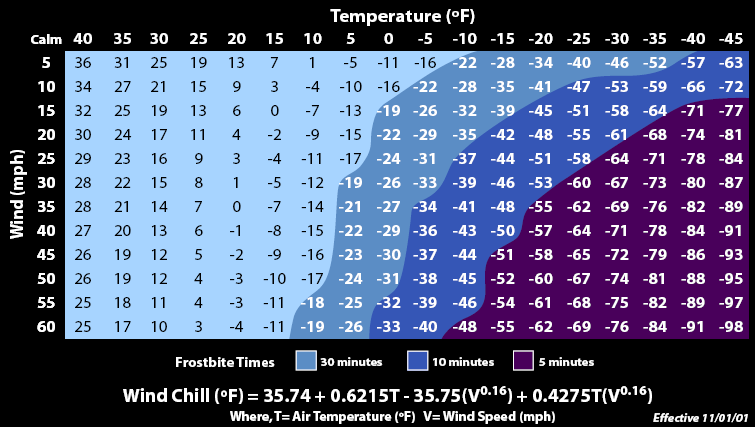 Wind Chill Index Chart — find actual temperature on the horizontal axis, wind speed on the vertical axis, where they intersect is your “feels like” temperature.
4. How to Read This Chart
- Horizontal axis: Air temperature (℉)
- Vertical axis: Wind speed (mph)
- Intersection: Your “feels like” temperature
Quick Example
- Actual temperature: 5℃ (41℉)
- Wind speed: 20 km/h (12 mph)
- Feels like: 0℃ (32℉) or even lower
5. Why This Is Critical for Tents
Wind can make it feel much colder — not just a little. And the tent’s job is to reduce wind’s impact on you. If your tent doesn’t block wind well, or if ventilation becomes uncontrolled (turning “ventilation” into “wind inlet”), you’re essentially sleeping with wind.This is why people say: “The temperature isn’t that low, but I’m still freezing.” The real problem isn’t temperature — it’s wind that isn’t controlled.
Part 4: Ventilation Isn’t “More Is Better” — It Needs to Be “Controlled”
Most people’s idea of ventilation: “Crack the door open a bit.” But the more professional concept is:Controlled Ventilation — making air flow along the path you want, not wherever the wind pushes it.
1. What Is Controlled Ventilation?
The ideal setup creates natural convection:- Low intake vents (cold air enters from the bottom)
- High exhaust vents (warm moist air escapes from the top)
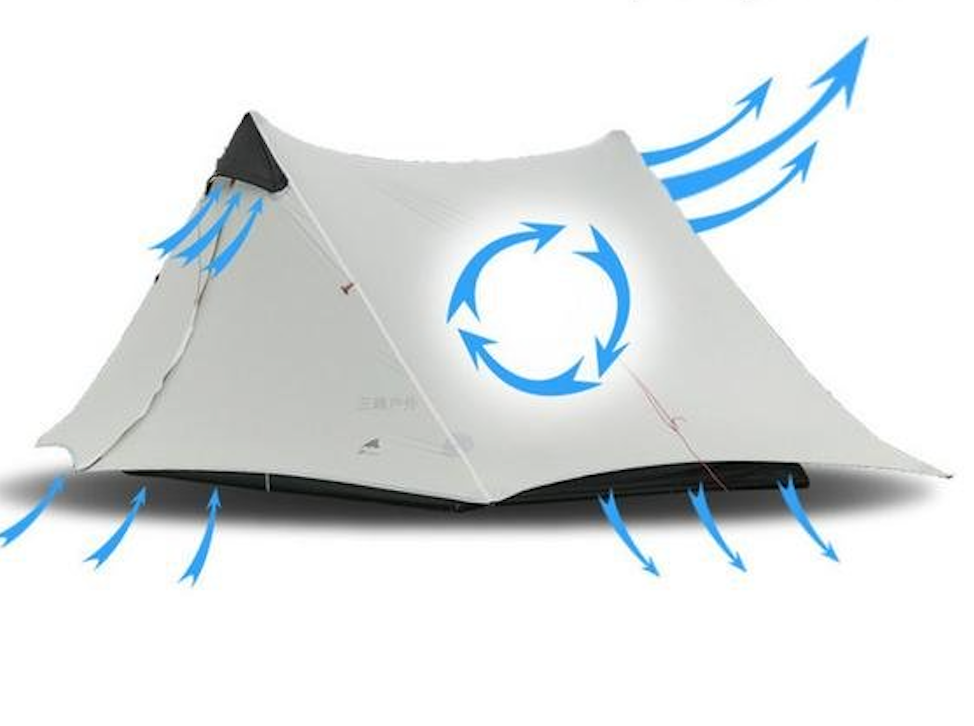
Low-in, high-out ventilation creates natural convection — the most effective way to manage tent humidity.
2. Two Common Mistakes
❌ Fully Sealed: Moisture can’t escape. Condensation increases. Air becomes damp → feels colder.
❌ Fully Open: Wind blows directly in. Warm air layer gets destroyed. Heat loss accelerates.
3. The Right Approach
✅ Do this:
- Open top vents first (priority)
- Leave a small gap at the bottom
- Adjust openings based on wind direction
- Try to create an “in + out” airflow path
Part 5: Moisture — Why “Dampness” Makes You Colder
This is something most people only fully realize after a few camping trips.1. Why Humid Air Feels Colder
When humidity is high:- Clothing absorbs moisture more easily
- Heat transfers away from your body more readily
- Perceived temperature drops noticeably
2. Your Tent Directly Affects Humidity
Your tent determines whether moisture gets trapped, whether condensation forms, and whether that water ultimately makes contact with you.3. Single-Wall vs. Double-Wall
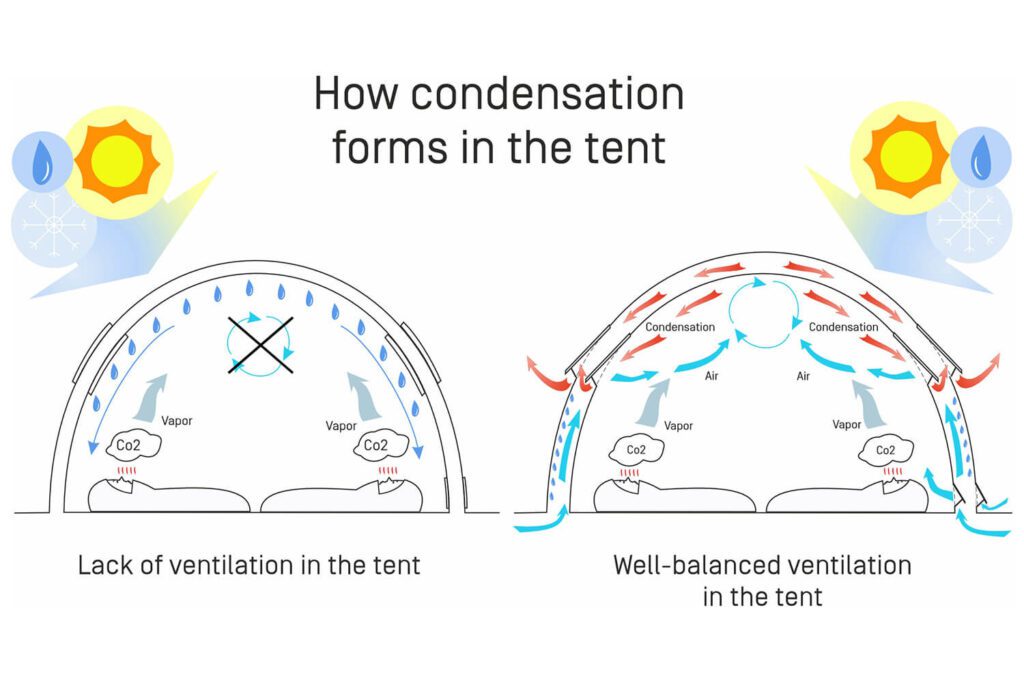
Single-wall tents (left) let condensation form directly on the inner surface. Double-wall tents (right) keep condensation separated from the sleeping area.
- Single-wall: Condensation happens right in front of you
- Double-wall: Condensation gets physically separated from where you sleep
This is why many experienced campers say double-wall tents “feel drier” — not necessarily warmer, but significantly more comfortable.
Part 6: Space Size — Smaller Isn’t Always Warmer
Most people assume a smaller tent equals a warmer tent. Reality is more nuanced.Problems with Small Spaces
- Moisture accumulates faster (less air volume to dilute it)
- Condensation is more obvious and harder to avoid
- Easier to accidentally touch the tent walls (and get wet)
Problems with Large Spaces
- Less effective at blocking wind (more surface area exposed)
- More air volume means harder to maintain stable warmth
Practical sizing guide:
- 1 person → Get a 1.5-person tent
- 2 people → Don’t choose a tight 2-person tent
- Always check: can you accidentally touch the tent walls when sleeping?
Part 7: Real Examples
🎯 Example 1: Wind Impact
Environment: Mountain camping, windy night, around 10℃
Tent A (faces into wind, taller structure): Feels noticeably cold
Tent B (sheltered setup, sits close to ground): Feels stable and comfortable
Same temperature. Completely different experience.
🎯 Example 2: Moisture Problem
Environment: Lakeside camping
Camper A (no ventilation, all gear stored inside): Heavy condensation → feels colder
Camper B (ventilation open, wet gear stored outside): Much more comfortable
🎯 Example 3: The “Seal It Up” Mistake
What they did: Sealed the tent completely to “trap warmth”
Result: Condensation increased, air became damp, felt even colder
Part 8: Summary
Next time you feel cold camping, ask yourself: is it the temperature, or is the environment making you colder? A tent’s job isn’t to make you warmer — it’s to reduce the factors that make you cold. If it doesn’t do these well:- Block wind
- Control airflow
- Manage moisture
You’ll feel colder than the actual temperature — every single time.
Part 9: Q&A
Q1: Can tents keep you warm?
No — they can’t generate warmth. They can only reduce heat loss.
Q2: Why does sealing up make it colder?
Because moisture builds up inside the sealed tent, and damp air pulls heat away from your body much faster.
Q3: Are double-wall tents warmer?
Not necessarily warmer, but definitely drier — which often matters more than raw temperature.