Part 1: The More Careful You Are, The Wetter It Gets
You’ve probably had one of those nights:
It’s raining outside. You’ve been super careful:
- Moving slowly when entering and exiting
- Not touching the inner tent
- Taking off your shoes gently
But the next morning:
You might even think:
Most people blame the tent:
- The tent is faulty
- The waterproofing isn’t working
But here’s the thing:
The problem isn’t whether you’re paying attention — it’s what you’re paying attention to.
Part 2: There Are Two Completely Different Ways Water Gets In
In camping, water enters your tent in only two ways:
Path A: Water “Seeps” From Outside (Waterproofing Issue)
Things like:
- Fabric isn’t waterproof enough
- Seams are leaking
- Ground water pooling
Path B: Water You “Bring In” (Usage Issue)
Like:
- Rain coming in when you open the door
- Water on your shoes
- Dripping from your raincoat
- Water on your hands splashing in
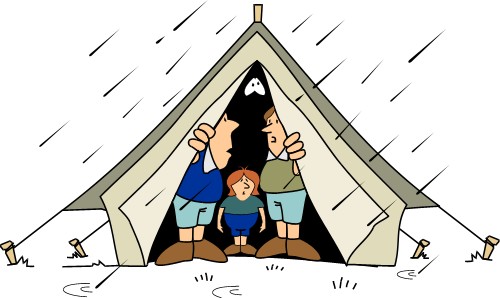
Part 3: A Detail You Might Not Notice: Rain Doesn’t Fall “Straight Down”
Most people imagine rain falling:
But with any wind at all, the reality is:
This leads to something critical:
If your tent door:
Then when you open that door, you’re essentially:
A Simple Way to Check
Next time it rains, notice:
- Does rain hit one side of the tent more than the other?
- Are there directional water stains on the ground?
Part 4: Why “Opening the Door Slowly” Actually Lets More Water In
A lot of people think:
But in real camping situations, this logic often works against you.
What’s happening?
When you open the door slowly:
- The door stays half-open for longer
- The opening stays exposed
- Wind and rain have time to get inside
The better approach is actually:
Part 5: The Vestibule Isn’t About Space — It’s About “Action Separation”
Most people think the vestibule is:
But a more accurate way to think about it:
The vestibule is a tool that separates “wet actions” from “dry space”
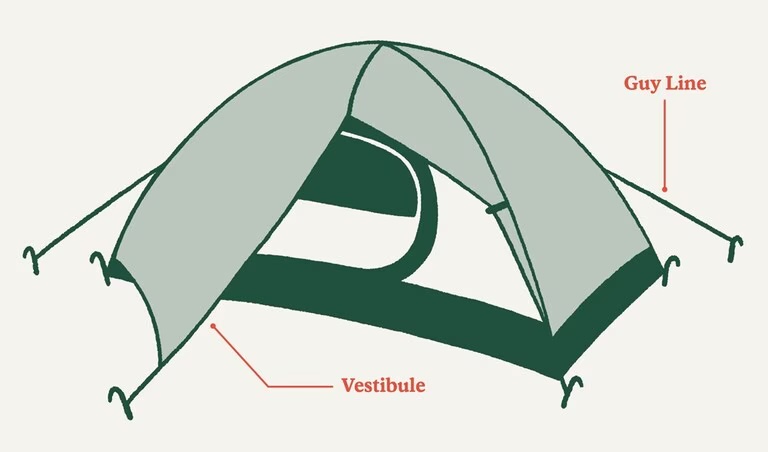
What are “wet actions”?
These actions all bring in water:
- Taking off a raincoat
- Setting down shoes
- Removing a hat
- Shaking off water
- Handling wet gear
If these happen inside the inner tent:
If these happen in the vestibule:
Part 6: A Simple But Effective Way to Judge
You can use one sentence to judge whether you’re using your tent correctly:
If you need to “wipe down the floor” after entering and exiting, your process is already wrong
Part 7: The Correct Entry/Exit Flow (Memorize This as a Process)
I’m not giving you “steps” here — I’m giving you a complete action flow:
1. As you approach the tent
- Don’t rush to open the door
- First notice which direction the wind is coming from
2. Before opening the door
- Use your body to block the windward side
- Only open the zipper a small amount
3. Before entering the inner tent
- Don’t immediately crawl into the inner tent
- Stay in the vestibule for 1–2 seconds
4. Do these in the vestibule
- Take off shoes
- Take off raincoat
- Briefly shake off water
5. Then enter the inner tent
- Make clean, decisive movements
- Complete the entry quickly
Part 8: Small Details That Are Easy to Overlook
These aren’t big problems, but they add up over time:
Detail 1: Water on your hands
Most people pay attention to their feet but ignore their hands.
Detail 2: Top of your backpack
Even if you haven’t been in the rain:
Detail 3: Your pant legs
Especially on grass:
Detail 4: Door flyback
Some tent doors, when opened:
Part 9: Quick Test: Is Your Tent “Leaking” or Are You “Bringing Water In”?
If you notice your tent starting to get wet, don’t jump to conclusions — use this method to check quickly.
First, look at “where the wetness is”
#### Situation 1: Wetness concentrated around the door area
Symptoms:
- Ground near the door is damp
- Inner tent is wet on the side near the door
- Center area is relatively dry
#### Situation 2: Wetness starts “from a specific point”
Symptoms:
- One area is noticeably wetter
- There’s “linear” or “dotted” water penetration
#### Situation 3: Evenly damp
Symptoms:
- A layer of water on all interior walls
- Everywhere is wet
Next, look at “how fast it changes”
#### Gets wet fast (within minutes)
- Water coming in immediately when door opens
- Wind and rain directly hitting inside
#### Gets wet slowly (over hours)
- Wet gear
- Condensation
- Accumulation
Finally, look at “when it started”
- Gets wet the moment you open the door → Door opening method / wind direction issue
- Gets wet in the middle of the night → Condensation
- Gets progressively wetter the next day → Water is accumulating
A Simple But Useful Summary
Part 10: Summary (Another Way to Say It)
If we put it more directly:
What really determines whether your tent stays dry isn’t just the gear:
- How you open the door
- Where you take off gear
- Whether you have a “buffer zone”
- Whether you’re fighting against wind and rain or working with them
Part 11: Q&A
Q1: What if there’s no vestibule?
You can:
- Use a tarp for coverage
- Or choose a sheltered position out of the wind
Q2: Do I have to enter and exit really fast?
Not “fast” — it’s:
Q3: Why are other people’s tents dry while mine is wet?
The difference is most likely in: